
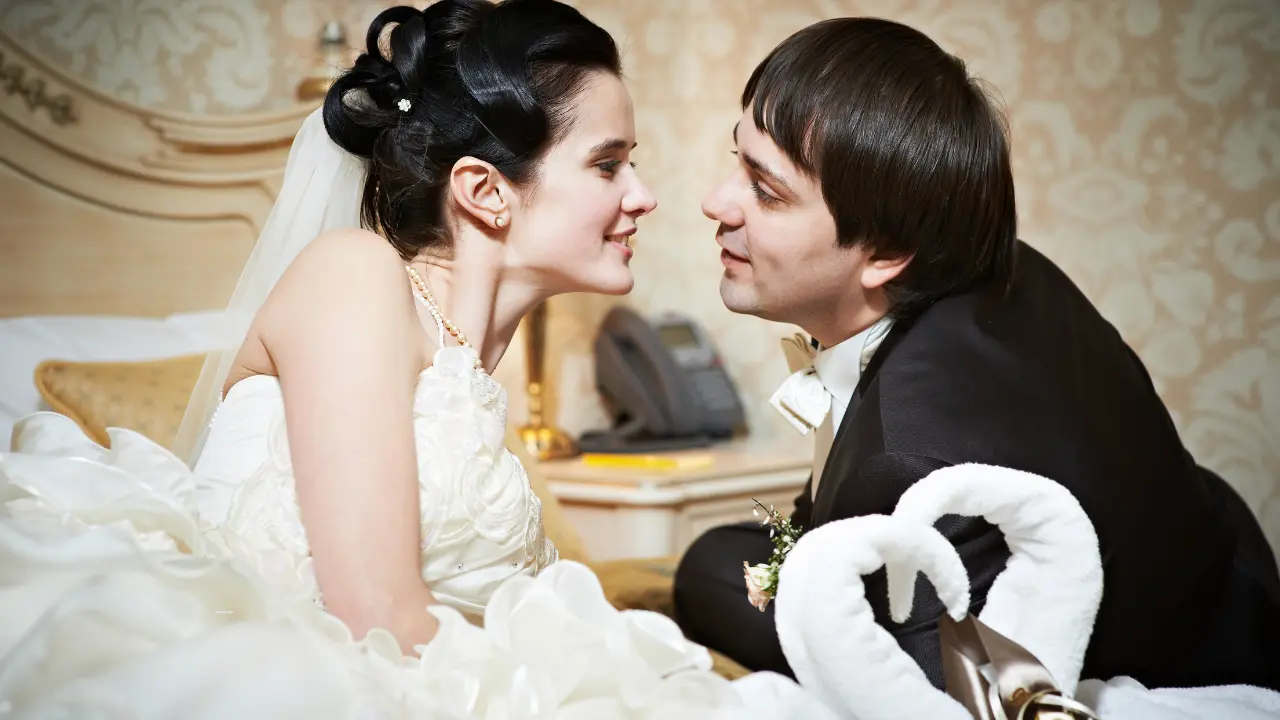
There’s a version of the wedding night that lives in movies champagne fizzing, rose petals on a king bed, two people who somehow aren’t exhausted after twelve hours of smiling, hugging relatives they haven’t seen in a decade, and making sure the caterer got paid. That version is fine as fantasy. As preparation, it’s almost useless.
The wedding night is one of the most anticipated moments couples build toward and one of the least honestly discussed. What actually helps is real information: what to expect emotionally, physically, and practically so that whatever happens feels manageable, not like a failure.
The Emotional Reality Most Couples Don’t Anticipate
Here’s something wedding planners rarely mention: the emotional crash after the ceremony is completely normal. After months of planning and the adrenaline of the day itself, many couples feel a wave of flatness — sometimes sadness, sometimes anxiety — once they finally close the hotel room door. Psychologists call this a variation of post-event depression, and it hits harder when expectations have been sky-high.
The wedding night carries enormous symbolic weight in American culture. That weight doesn’t disappear just because you want to relax. Couples who go into the evening expecting magic and getting instead quiet exhaustion sometimes interpret that gap as a sign of something wrong. It isn’t.
What helps is naming this possibility before it happens. Talking with your partner beforehand — not in a clinical way, but honestly about the fact that you might both just want to order room service and fall asleep takes enormous pressure off the actual night.
Planning the Wedding Night: The Logistics That Actually Matter
| Detail | What to Arrange | When |
|---|---|---|
| Hotel room | Request early check-in, late checkout, quiet floor | 2–4 weeks before |
| Food | Pre-order favorite snacks or arrange late dinner | 1 week before |
| Clothing | Pack wedding night attire in carry-on, not checked bags | Day before |
| Transportation | Private car, not shared shuttle | Week before |
| Communication | Let both families know you’ll be unavailable | Day of |
The most common wedding night regret isn’t about intimacy — it’s about hunger. Most couples eat almost nothing at their reception because they’re busy. Building in a late meal, even if it’s just a room service burger, changes the entire tone of the evening.
First Night Together as a Married Couple: What the Pressure Actually Is
The phrase “wedding night” carries centuries of expectation in American culture, and it’s worth being honest about where that pressure comes from. For some couples, it’s religious tradition. For others, it’s the cultural narrative that the first night of marriage should be transcendent. For many, it’s simply the assumption that intimacy is expected, full stop.
But bodies don’t perform on command especially after a stressful, emotionally loaded day. Research from the American Psychological Association consistently shows that stress directly suppresses sexual response. The wedding day is, physiologically, a stress event even when it’s a joyful one.
Couples who report the most satisfaction with their wedding night tend to share a few things in common: they set low expectations, they communicated beforehand, and they treated the night as a beginning rather than a performance.
If You’re Nervous: Honest Advice for the Wedding Night
Nervousness before the wedding night is not a red flag. It doesn’t mean you’ve married the wrong person. It doesn’t mean something is wrong with you. It means you’re human, and you’ve assigned significant meaning to this particular evening.
What actually helps:
- Slow everything down. There’s no timeline to meet. The night doesn’t have a deadline.
- Talk before you get there. Not a formal conversation — just something honest on the car ride to the hotel. “I’m a little nervous” is easier to say before you’re in the room.
- Have a Plan B and make it guilt-free. Deciding in advance that sleeping is also a valid outcome removes the pressure of having to perform.
- Bring comfort items. A familiar playlist, your own pillow, a book — anything that makes a hotel room feel less clinical.
Intimacy on the Wedding Night: What Couples Actually Experience
Survey data from wedding industry researchers paints a more complicated picture than the movies suggest. A significant portion of couples — estimates range from 30–40% depending on the study report that their wedding night did not include sex at all. Exhaustion, alcohol, and the emotional intensity of the day are the most commonly cited reasons.
That number matters because it normalizes something couples often feel embarrassed to admit. The wedding night doesn’t have to look any particular way.
For couples who do want physical intimacy, a few things are worth knowing. First, discomfort is possible — particularly for people experiencing penetrative sex for the first time. Using a quality lubricant is not an afterthought; it’s a practical consideration. Second, arousal takes longer when you’re tired, so patience and slower pacing matter more than any particular technique. Third, communication during the experience — even just “is this okay?” or “do you want to try something different?” — matters more than any other factor.
The Wedding Night Across Different Relationship Contexts
The wedding night looks different depending on where a couple is in their relationship. There’s no single template, and framing this clearly is something most guides miss entirely.
For couples who waited until marriage: The first time being the wedding night adds a layer of significance — and potential performance pressure — that doesn’t exist otherwise. Physical intimacy is a skill that develops over time. Expecting the first experience to be seamless is an unrealistic bar. What matters most is feeling emotionally safe with your partner, communicating openly, and giving yourselves genuine permission to learn together.
For couples who’ve been together for years: Sometimes these couples find the wedding night feels almost anticlimactic — not in a bad way, but in a “we’re already comfortable together” way. Some report that the emotional depth of the day made the night unexpectedly tender. Others say they were simply too exhausted and laughed about it the next morning. Both are fine.
For couples blending families or navigating complex dynamics: The wedding night may come with additional emotional weight — anxiety about new roles, complicated feelings about past relationships, or just the sheer logistical and emotional load of a big family wedding. Acknowledging that this complexity exists, rather than pretending the wedding night is a clean emotional slate, is more honest and more useful.
Wedding Night Destination and Setting: Does It Matter?
The short answer is yes, but not in the way most couples assume. The setting doesn’t create the experience — the couple does. But certain logistical elements meaningfully reduce friction.
| Setting Type | Pros | Watch Out For |
|---|---|---|
| On-site hotel at venue | No travel after reception | Noise from lingering guests |
| Upgraded suite elsewhere | Privacy, fresh start | Travel time when exhausted |
| Home | Total comfort, familiar | Difficult to mentally “switch off” |
| Next-day travel | Rest first, celebrate later | Can feel anticlimactic night-of |
Many couples are now choosing to delay the “official” wedding night — arriving at their honeymoon destination a day after the wedding so they can actually sleep the night of the ceremony without guilt. This is increasingly common and genuinely smart planning.
What to Pack for the Wedding Night
This is practical and underserved in most guides. What you bring shapes what’s possible.
Essentials most people forget:
- Lubricant (buy it before, not at a drugstore at 11pm)
- Skincare routine items — feeling like yourself helps
- A phone charger and the understanding that you can put the phone away
- Any medication you take regularly (ask your doctor about timing relative to alcohol)
- Comfortable clothing options beyond just “lingerie or pajamas”
What to leave behind:
- Elaborate expectations written in your head like a script
- The idea that anything specific must happen for the night to “count”
The Morning After the Wedding Night
The morning after often gets zero coverage, but it’s frequently more emotionally resonant than the night itself. Waking up as a married couple — the first breakfast, the first quiet conversation without an event to plan — carries its own tenderness.
Some couples feel elated. Some feel a version of “is this it?” followed quickly by recognizing that’s a perfectly normal response to any major life transition. Marriage is not a feeling that switches on; it’s a relationship that deepens over years.
If the wedding night didn’t go the way you hoped — if you were too tired, if something felt uncomfortable, if it was awkward — the morning after is the first chance to laugh about it together or simply decide to start fresh. One night is not a preview of your entire marriage.
Common Wedding Night Myths Worth Retiring
| Myth | Reality |
|---|---|
| You’ll instinctively know exactly what to do. | Intimacy is learned, not hardwired. Even couples with prior experience are navigating a new emotional context together. |
| It has to be perfect. | “Perfect” is a standard invented by people selling things. Connection is what actually matters — and connection is imperfect by nature. |
| If you’re not in the mood, something is wrong. | Exhaustion, alcohol, anxiety, and excitement are all physiological states that suppress desire. Not being in the mood on your wedding night is extraordinarily common. |
| The wedding night sets the tone for your entire marriage. | No single night does that. Decades of choices, honest conversations, and how you repair after conflict set the tone. |
| Everyone else’s wedding night was amazing. | They weren’t. Most couples just don’t talk about it. The gap between public narrative and private experience here is enormous. |
| You have to stay up late to make it special. | Some of the most meaningful wedding nights involve ordering food, laughing about something that went wrong at the reception, and falling asleep by 10pm. |
FAQs About the Wedding Night
What if we’re both too tired on our wedding night?
Sleep. Genuinely — sleep together, wake up as a married couple, and have the morning you actually have the energy for. This is more common than anyone admits and completely fine.
Is it normal to feel emotional or even sad on the wedding night?
Yes. Post-wedding emotional drops are well-documented. After months of anticipation and a day of intense emotion, a flatness or unexpected sadness is a normal neurological response, not a sign that anything is wrong with your relationship.
What if the wedding night is our first time being intimate?
Give yourselves enormous grace. It is extremely unlikely to be everything you imagined, and that’s okay. Physical intimacy is a practice. The wedding night is the beginning of that practice, not a test of it.
How long do most couples stay at the reception before leaving for their wedding night?
Most couples leave their reception 3–5 hours in, often after the key events (cake cutting, first dances, bouquet toss). Staying longer is always an option, but leaving before you’re completely depleted is worth considering.
Should we plan activities for the wedding night or just go with the flow?
A loose structure helps more than a script. Knowing you have food available, a comfortable space, and no obligations the next morning is enough. Rigid plans create pressure.
What’s the best hotel for a wedding night?
Whatever feels genuinely comfortable to you both — not the most expensive option, necessarily. A hotel where you’ve stayed before and enjoyed, one that’s quiet and private, often matters more than five-star branding.
The wedding night is not a performance. It’s not an audition for marriage. It’s a private evening between two people who’ve just made a significant commitment to each other — and whatever that evening actually looks like, it belongs to you. The more honestly you approach it, and the less you try to make it match a version that was written for someone else, the better it tends to go.
Start talking with your partner about it now. Not because it’s a problem to solve, but because a little honest conversation before the wedding night is the best preparation anyone can actually offer.
