
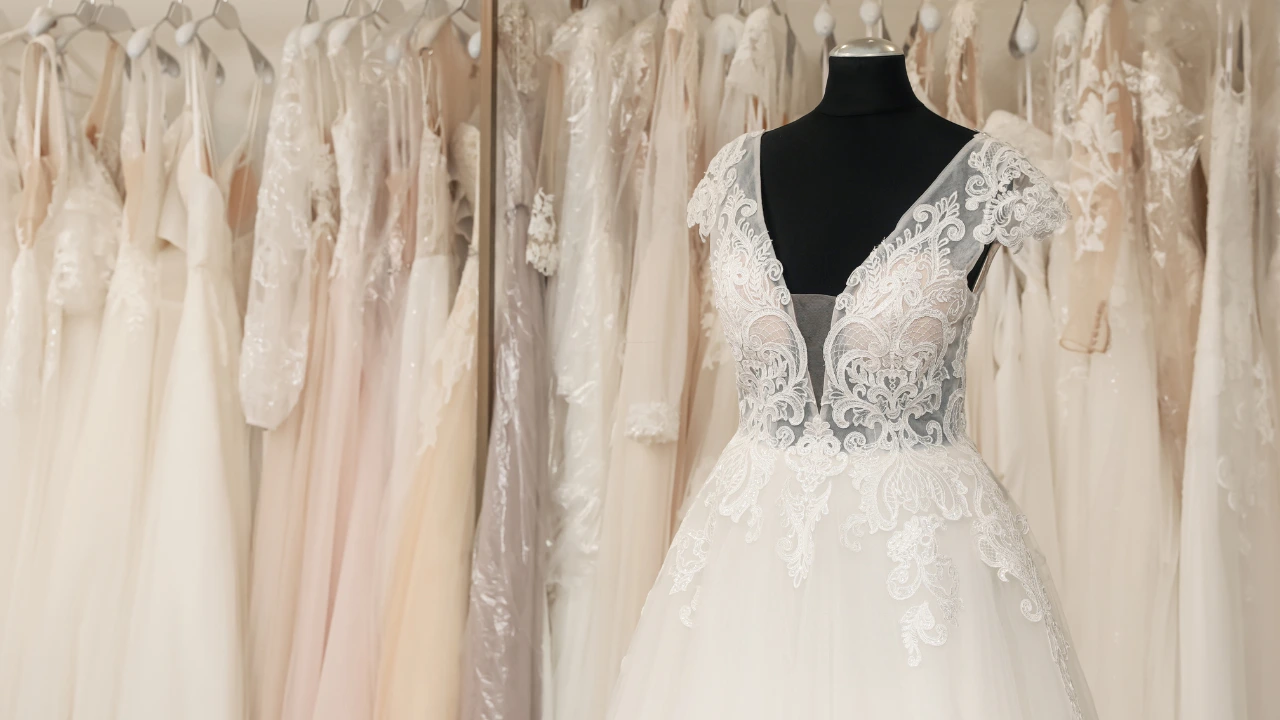
Understanding the different wedding gown styles available today is the smartest first step any bride can take before setting foot in a boutique. Every gown on a bridal salon rack looks roughly the same at first glance — white, floor-length, vaguely shimmery. The real differences only show up once you’re in front of a mirror: whether you can lift your arms over your head, whether the skirt drags, whether you can sit through dinner without boning digging into your ribs.
This guide breaks gowns down the way a stylist actually would — silhouette, neckline, sleeve, fabric — then connects those choices to what matters most: venue, budget, and how you want to feel on the day itself.
The Core Silhouettes, and What Each One Actually Does
Silhouette is the shape of the dress from shoulder to hem, and it is the single biggest factor in how a gown moves, photographs, and feels by hour six of the reception. When brides start exploring different wedding gown styles, most designs fall into one of six families.
A-Line. Fitted bodice releasing gradually from the waist into a soft triangle. It is the go-to for brides who haven’t settled on a vision, since it flatters a wide range of body types and works for almost any venue.
Ball Gown. Fitted bodice, dramatically full skirt over layers of tulle. Built for grand spaces — cathedral aisles, big dance floors — and a clear “moment” on entrance. The trade-off: heavier, warmer, and harder to maneuver through doorways and dance floors.
Sheath / Column. Follows the body’s line from shoulder to floor with little flare. Reads modern, photographs cleanly, and is the lightest, most packable option — a real plus for destination weddings. It is also the least forgiving on fit, so alterations matter more here.
Mermaid & Trumpet. Both hug the bust, waist, and hip before flaring, just at different points. Mermaid flares around the knee for a dramatic line; trumpet releases higher, around mid-thigh, making walking and sitting easier. Brides who want the curve-hugging look but worry about mobility often choose trumpet.
Empire Waist. Seam sits just below the bust, fabric flowing loosely to the hem. The most comfortable option for long days on your feet, it minimizes emphasis on the midsection and works well as a maternity-friendly choice.
Tea-Length, Midi & Two-Piece Separates. Hemlines at the calf or knee, or a top-and-skirt combination. Increasingly mainstream for courthouse ceremonies, brunch receptions, and brides who want to dance without fabric underfoot.
| Silhouette | Feels Like | Best Suited To | Watch Out For |
|---|---|---|---|
| A-Line | Classic, effortless | Most body types, most venues | Can feel safe if you want something bolder |
| Ball Gown | Dramatic, regal | Cathedrals, ballrooms, formal black-tie | Heavy, hard to dance and travel in |
| Sheath / Column | Sleek, modern | Destination weddings, minimalist venues | Least forgiving of fit; needs precise alterations |
| Mermaid | Curve-defining, glamorous | Evening receptions, photo-focused weddings | Limits stride length; tricky in sand or grass |
| Trumpet | Curve-defining, easier movement | Same as mermaid, more mobility needed | Slightly less dramatic flare than mermaid |
| Empire Waist | Relaxed, flowing | Outdoor, summer, pregnancy | Less structured shape for those who want definition |
| Tea-Length / Separates | Playful, modern | Courthouse, brunch, second-look outfits | Reads less “traditional” to some families |
Necklines: The Detail That Frames Every Photo
The neckline sits closest to your face, making it the first detail guests and photographers register — and one that can quietly change how a silhouette reads. Among all the different wedding gown styles, neckline choice is often the most personal and most visible decision a bride makes.
| Neckline | Description | Works Especially Well For |
|---|---|---|
| Sweetheart | Curved like the top of a heart | Softening broad shoulders, classic romance |
| V-Neck | Deep, angular point | Elongating the neck and torso |
| Illusion | Sheer mesh extending to the collarbone or higher | Modesty without losing an open, airy feel |
| Off-the-Shoulder | Sits below the shoulder, sleeves optional | Drawing attention to the collarbone and arms |
| Halter | Straps meet at the back of the neck | Showing off toned shoulders and back detail |
| Square | Straight horizontal line across the chest | A structured, vintage-leaning look |
| High Neck | Closed collar, sometimes with sheer paneling | Cooler-weather weddings, modern minimalism |
Sleeves Are Doing More Work Than They Used To
Sleeves stopped being purely a modesty decision years ago — now they add personality without extra embellishment. Long illusion sleeves lean vintage and suit fall and winter ceremonies. Bishop sleeves, full and gathered at the wrist, read romantic and a little bohemian. Detachable sleeves give structure for the ceremony and bare shoulders for the dance floor without needing two dresses.
For warm-weather weddings, plenty of brides still go sleeveless — there is no rule that a “complete” bridal look needs sleeves at all. Whether you prefer sleeveless, long, or something in between, sleeves are one of the easiest ways to distinguish between the different wedding gown styles within the same silhouette family.
Fabric Changes Everything — Including How You’ll Feel by 9 PM
Two dresses can share the same silhouette and feel like entirely different garments depending on fabric — it deserves its own decision, not an afterthought.
| Fabric | Texture & Drape | Best For |
|---|---|---|
| Satin | Smooth, structured, slight sheen | Clean silhouettes (sheath, column, modern A-line) |
| Tulle | Light, airy, voluminous | Ball gowns, romantic skirts, layered details |
| Lace | Textured, often sheer-backed | Vintage, bohemian, illusion necklines and sleeves |
| Organza | Crisp, slightly stiff, holds shape | Structured skirts that need body without heaviness |
| Crepe | Soft, matte, body-hugging | Sheath and column gowns, destination weddings |
| Chiffon | Sheer, flowing, lightweight | Outdoor and beach ceremonies, empire waists |
Rule of thumb: heavier fabrics like satin and structured tulle suit indoor or cooler-season weddings, while crepe and chiffon handle heat and movement better outdoors.
Matching the Dress to the Wedding, Not the Other Way Around
The most common regret bridal consultants hear is “I wish I’d thought about my venue first.” A gown that looks perfect on a hanger can become a liability on sand, gravel, or a spiral staircase. Knowing which of the different wedding gown styles suits your specific setting will save you from costly second-guessing after the purchase.
| Wedding Setting | Silhouettes That Work Best | Why |
|---|---|---|
| Beach / Destination | Sheath, empire waist, lightweight A-line | Packs easily, breathes in heat, won’t drag in sand |
| Rustic / Barn | Boho A-line, tea-length, lace-detailed gowns | Handles uneven floors, pairs with looser styling |
| Formal Ballroom | Ball gown, mermaid, structured A-line | Scales to large rooms and formal lighting |
| Courthouse / City Hall | Tea-length, midi, separates, slip dress | Practical for sitting, walking, and quick changes |
| Garden / Outdoor | Empire waist, chiffon A-line, off-the-shoulder | Soft movement complements natural surroundings |
What Actually Matters for Fit — Not the Generic “Body Type” Advice
Most articles assign a silhouette to a body shape, as if there is one correct gown per measurement. In practice, the better question is what you want to emphasize or ease up on for one specific day — not which category you fall into.
A basque waist (dipping below the natural waistline) creates definition for brides who want a more structured middle; a column or sheath elongates the line for anyone who wants a sleeker read, regardless of height. Brides carrying weight in the hips often favor A-line or ball gowns because the skirt skims past that point, while trumpet over mermaid gives more ease through the leg for those who want lighter movement.
The reality is that different wedding gown styles suit different body goals — not body types. None of this is a rulebook; it is a starting point for the fitting room, where the only opinion that matters is your own.
What Wedding Dresses Actually Cost in the US Right Now
Budget conversations get murky fast because “average cost” gets quoted without context. Industry surveys, including The Knot’s Real Weddings Study, put the national average gown spend at roughly $2,000 to $2,100, with most brides landing somewhere between $1,200 and $3,000 depending on retailer, fabric, and customization. That number moves with geography — brides in New York and California metro areas tend to spend noticeably more than the national average, while many Midwest and Mountain West markets run lower.
| Budget Tier | Typical Price Range | What You’re Paying For |
|---|---|---|
| Off-the-rack / sample sale | $200 – $1,200 | Existing inventory, minimal customization, fastest turnaround |
| Mid-tier boutique | $1,200 – $2,800 | New order in your size, standard alterations included or close to it |
| Designer / made-to-order | $3,000 – $6,000 | Brand name, premium fabric, more construction detail |
| Couture / custom | $6,000 – $10,000+ | Fully bespoke pattern, hand-finishing, in-house design process |
A line item brides consistently underestimate is alterations — commonly $200 to $800, and higher for heavily beaded or structured gowns. Hemming, bodice adjustments, and adding a bustle for the train are the three most frequent fixes, and nearly every gown needs at least one of them regardless of how well it fit off the rack.
Where US Brides Actually Go Dress Shopping
Bridal shopping has clear regional hubs, and knowing them can save a lot of wasted appointment time. Different wedding gown styles are also concentrated by region — destination-wedding looks tend to cluster on the coasts, while formal ballgown-forward collections dominate Southern markets. The table below shows a representative spread of well-reviewed boutiques across major US regions.
| Region | Example Destination | Known For |
|---|---|---|
| Northeast | New York City | Largest concentration of designer and couture options |
| West Coast | Los Angeles | Emerging and editorial-leaning independent designers |
| Midwest | Chicago | Accessible price points, strong inclusive sizing |
| Mountain West | Denver | Wide size ranges, relaxed appointment style |
| South / Southeast | Nashville, Dallas | High volume of modern, free-spirited bridal labels |
| Pacific Northwest | Seattle | Airy, romantic, bohemian-leaning collections |
| Coastal Southeast | Savannah area | Boutique experience near a popular destination-wedding region |
If you’re not near any of these, most boutique groups ship and host trunk shows nationally, and online-first retailers have made try-at-home sample programs increasingly normal — worth considering if appointment availability in your area is limited.
Buying Secondhand or Renting Is No Longer a Compromise
A meaningful share of recent brides are skipping the traditional retail path entirely. Pre-owned bridal marketplaces, consignment boutiques, and gown rental services have grown enough that “secondhand” no longer signals a budget compromise — it is a deliberate choice for brides who don’t want to store, preserve, or ever wear the dress again after one day.
The full range of different wedding gown styles is now available through resale channels, including designer and couture pieces that would otherwise be inaccessible at their original price points. The trade-off is timeline: secondhand and made-to-measure pre-owned gowns often need more lead time for alterations since you’re working with an existing garment rather than a custom order built to your measurements.
A Simple Way to Narrow It Down
Skip the Pinterest spiral and work through this order instead:
- Lock your venue and season first. A gown chosen before the venue is often the first thing brides change their mind about.
- Pick two silhouettes, not five. Use the venue table above to shortlist, then try both in person — photos rarely predict how a silhouette will actually move on your body.
- Set a real ceiling, including alterations. Add $400–$800 to whatever the dress itself costs before you start shopping, so the number on the price tag isn’t the number you actually spend.
- Choose fabric for your actual wedding month, not the season you wish it were.
- Book three appointments, maximum, in one week. More than that and gowns start blending together in memory — bring photos from your favorites at each stop so you can compare across appointments.
Frequently Asked Questions
What’s the difference between a wedding dress and a wedding gown?
In everyday use, the terms are interchangeable. Some stylists reserve “gown” for full-length, more formal styles and use “dress” more loosely to include shorter or less formal options, but there is no industry-wide rule.
What’s the actual difference between mermaid and trumpet silhouettes?
Both fit closely through the hip before flaring, but a trumpet flares higher — around the mid-thigh — while a mermaid holds its fitted line until around the knee. Trumpet gowns are generally easier to walk and sit in.
How far in advance should I start shopping?
Most bridal consultants recommend starting eight to twelve months before the wedding for a made-to-order gown, since production and shipping alone can take four to six months before alterations even begin. Off-the-rack and sample sale shopping can be done in a much tighter window if needed.
Can I wear a colored wedding dress?
Yes — blush, champagne, sage, and even black gowns have all become mainstream options at major retailers rather than a niche request, and most designers now offer at least a few non-white colorways each season.
Do I need a slip or crinoline under my dress?
It depends on the gown’s construction. Ball gowns and many tulle skirts include built-in structure, but sheer fabrics like chiffon or lightweight crepe sometimes need a slip underneath for opacity and shape — your stylist will flag this during fitting.
Is it normal for a wedding dress to need alterations even if it “fits” in the store?
Yes, almost universally. Sample sizes rarely match a bride’s exact measurements, and even a well-fitted gown typically needs hemming and a bustle added before the wedding day.
Are there plus-size options across all silhouettes?
Absolutely. All different wedding gown styles are available in extended sizing through specialty boutiques and major bridal brands. Inclusive sizing has expanded significantly in the past few years, and many designers now produce their full collections through size 30 and beyond.
Whatever silhouette ends up working, the gowns that photograph best and feel best by the end of the night are rarely the most elaborate ones in the room — they are the ones that fit the day they were actually built for.
