
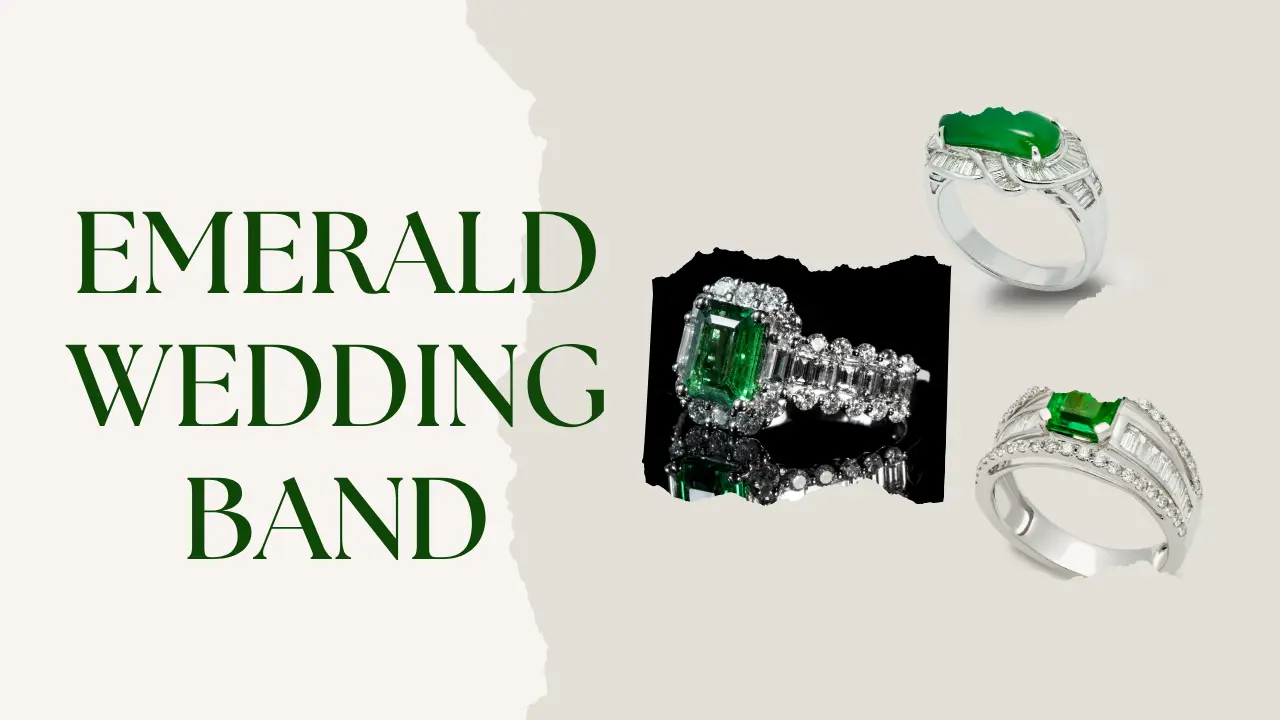
Green is having a moment in bridal jewelry. And not just any green.
Emeralds are showing up in 2026 wedding bands everywhere, from clean minimalist settings to bold pavé stacks sitting alongside diamond engagement rings. If you’ve been eyeing one, you’re right on time.
Here’s what actually matters before you buy.
Natural or lab-created?
This is the first question. And the answer depends on what you value.
Natural and lab-created emeralds are chemically identical. Same mineral structure, same hardness, same source of green color (chromium and vanadium). A lab-created emerald isn’t a fake. It’s a real emerald grown in a lab instead of mined from the earth.
The practical difference comes down to 3 things: price, appearance, and care.
Lab-created stones cost significantly less. Natural emerald pricing reflects rarity, origin, and the cost of extraction. Remove those variables and you get the same color, the same sparkle, for a fraction of the price. Most couples buying an emerald ring land somewhere between $1,200 and $4,500 depending on stone size, metal, and setting style.
On appearance: natural emeralds almost always carry inclusions called jardin, tiny internal fractures that form as the crystal grows. They’re part of the stone’s identity. Lab-created emeralds tend to look cleaner and more uniform. Which you prefer is genuinely personal.
On durability: both types sit at 7.5 to 8 on the Mohs scale. That’s harder than most gemstones but softer than diamonds and sapphires. Emeralds need a little more care in daily wear. Lab stones, with fewer internal fractures, are sometimes marginally tougher in practice.
One thing worth asking your jeweler: most natural emeralds on the market have been treated with oil or resin to fill surface fractures and improve clarity. Ask whether the stone has been treated and to what degree.
What settings work best
Bezel settings are one of the smartest choices for a wedding band. The stone is wrapped in a protective metal rim, which shields the edges from daily knocks. It also gives the band a sleek, modern look. Clean lines, minimal fuss, and the stone stays safer over time.
For something more expressive, full pavé color bands with alternating emeralds and diamonds are having a real moment. They pair beautifully with a plain diamond solitaire because the contrast does all the work.
Sculptural bands, ones with curves, waves, or dimensional metalwork, let the band stand alone as a statement piece. These work especially well if your engagement ring is more minimal.
Channel settings sit somewhere in the middle. Stones are set flush in a groove of metal, protected on the sides but exposed on top. A solid choice for everyday wear.
Metal choice
Yellow gold deepens the green in emeralds, making the color look warmer and richer. White gold or platinum creates sharper contrast and lets the stone pop. Rose gold softens everything and gives a more romantic feel.
No wrong answer here. But try to view the actual stone in the setting before deciding. Emerald color shifts noticeably depending on the metal surrounding it.
A few things worth keeping in mind
Setting style affects longevity. Prong settings expose more of the stone’s surface. Bezel and channel settings protect better. For a band worn every single day, protection matters.
Color is the most important quality factor in an emerald. Prioritize richness and saturation over size. A smaller, deeply saturated emerald will look better than a larger pale one every time.
If you’re buying for heirloom value, natural emeralds hold value better. If you want the most beautiful stone your budget can get, lab-created is the smarter buy.
FAQ
Can I wear an emerald wedding band every day?
Yes, with some care. Skip hard impacts, harsh chemicals, and ultrasonic cleaners. Warm water and a soft cloth is all you need.
Does an emerald wedding band go with any engagement ring?
Mostly yes. It pairs best with diamond solitaires and rose or white gold settings. Match the metal and you’re good.
Is lab-created always the better choice for a wedding band?
For daily wear, usually. Fewer inclusions, lower price, slightly more durable. Natural makes more sense if heirloom value matters to you.
What’s the best emerald color to look for?
Vivid medium-to-deep green with a slight blue undertone. Always view in natural daylight, not store lighting.
Do emeralds chip easily?
They can if the setting doesn’t protect them. Bezel and channel settings reduce that risk significantly. Avoid prongs if you’re hard on your hands.
How do I know if an emerald has been treated?
Ask your jeweler directly and get it in writing. Minor oiling is standard. Heavy resin filling is worth knowing about before you buy.
Is an emerald wedding band a good alternative to diamonds?
Depends what you want. Diamonds win on durability and brilliance. Emeralds win on color and personality. In 2026, a lot of couples are choosing personality.
