
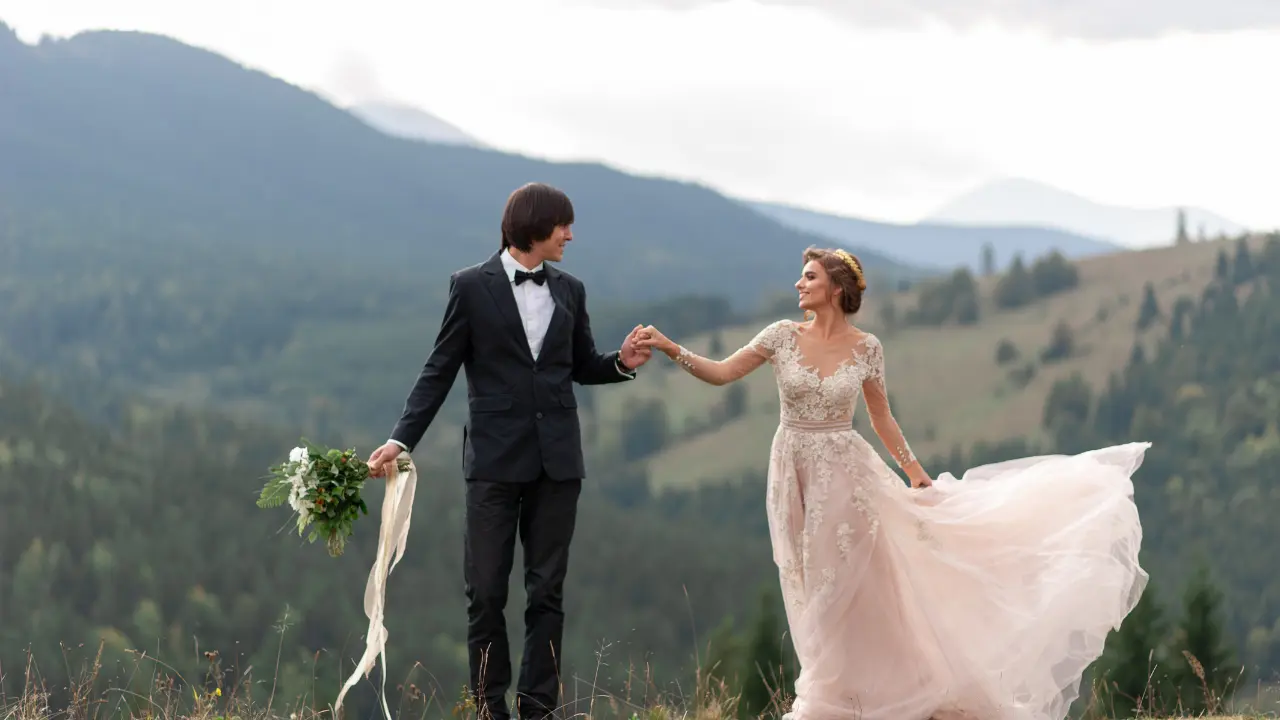
There’s a version of a mountain wedding that exists in your head right now — the one with granite peaks, golden aspen trees, and a ceremony that feels like it was designed by the landscape itself. Getting there requires decisions that most guides gloss over. This one doesn’t.
WHAT MAKES MOUNTAIN WEDDINGS DIFFERENT
The Setting Does the Decorating
Couples who marry at alpine venues consistently spend less on florals and décor than at comparable ballroom weddings. The backdrop handles the visual weight. A ceremony at treeline with a granite ridgeline behind the couple needs almost nothing else.
It’s a Different Kind of Planning
Altitude changes how bodies respond. Weather shifts by the hour. Vendors need to navigate access roads that GPS sometimes refuses to acknowledge. The couples who pull it off are the ones who treat logistics as seriously as aesthetics.
Why Guest Lists Run Smaller
Getting 150 people up a mountain road with overnight lodging is genuinely hard. That practical constraint produces weddings where every person there made an effort to be there. Guests routinely call it the most memorable wedding they’ve ever attended.
CHOOSING YOUR SEASON
Fall: The Most Popular Window — and the Hardest to Book
September through early October in the Rockies means golden aspen, comfortable temperatures, and the most photographically dramatic conditions of the year. The catch: venues and permits fill 12 to 18 months ahead. If you want October in Colorado, you need to be planning before the previous fall ends.
Summer: Book Early Morning Ceremonies
Summer offers wildflowers and the longest days, but afternoon thunderstorms in the Rockies build fast — typically between noon and 4pm. Experienced mountain planners consistently recommend a 10 or 10:30am ceremony start to finish the vows, portraits, and cocktail hour before that weather window opens. It sounds early. It works.
Late Spring: The Most Underrated Season
Late May through early June offers better venue availability, lighter crowds, emerging wildflowers at lower elevations, and often lower pricing. Mornings are cold and mud is a factor on unpaved paths — but couples who choose this window rarely regret it.
Winter: Rare, Beautiful, and More Affordable
Ski resort properties handle this season best. Low pricing, no crowds, and a visual aesthetic almost no other venue type can replicate. The logistics are more demanding, but the right couple finds the tradeoff worth it.
PERMITS: THE PART MOST GUIDES SKIP
National Park Ceremonies Require a Permit — No Exceptions
Even a private elopement with just the couple and an officiant requires a Special Use Permit in most national parks.
At Rocky Mountain National Park specifically:
- Permit fee: $300 (non-refundable)
- Applications open exactly one year before your wedding month
- Peak season cap: 60 permits per month
- Ceremony locations: 12 designated sites only — you cannot choose your own spot
- Commercial photographers need a separate $50 permit
Every national park has its own rules. Great Smoky Mountains, Yosemite, Glacier — each has distinct structures, guest count limits, and vendor policies. Always verify directly with the specific park before booking anything else.
National Forest Land: More Flexibility, Less Red Tape
National Forest land offers fewer site restrictions, lower permit costs, and more terrain options than national parks. The tradeoff: it’s public land, so other visitors may be nearby during your ceremony.
Private Venues: Most Control, Highest Cost
Private mountain lodges, ranches, and resort event spaces handle their own permitting and offer the most control over guest experience, weather backup, and vendor access. They also cost more and book the fastest.
Make this decision first — public land or private venue — before touching anything else. It shapes your entire timeline, budget, and planning approach.
ALTITUDE: THE HONEST VERSION
What It Actually Does to Your Body
Above 8,000 feet, each breath delivers roughly 25–30% less oxygen than at sea level. Acute mountain sickness sets in 6 to 12 hours after arrival — symptoms include headache, nausea, fatigue, and dizziness. Physically fit guests sometimes fare worse than sedentary ones because they push harder without recognizing the warning signs.
Practical Steps That Actually Help
Arrive early: Suggest guests arrive 24–48 hours before the ceremony. Include the venue elevation in your save-the-dates and wedding website.
Hydrate aggressively: Keep bottled water visible and actively refilled all day — not just at dinner service.
Pace the bar: Alcohol hits at roughly double its normal intensity at high elevation. Keep food available throughout rather than holding it until a single dinner sitting.
Consider oxygen: Some venues offer supplemental oxygen as a guest amenity. It’s more common than couples expect and signals genuine care for your guests.
What Altitude Does to Flowers and Cake
Low humidity and high UV wilt florals faster than sea-level conditions. Buttercream is less stable at elevation. When vetting any food or floral vendor, ask specifically whether they’ve worked at your venue’s altitude. The question alone reveals a lot about their experience.
HIRING VENDORS WHO KNOW THE TERRAIN
Why Local Knowledge Is the Most Leveraged Investment You’ll Make
A photographer, caterer, or planner who has worked at your elevation and your venue knows things that can’t be improvised on the day. Which access road floods after rain. Where the afternoon light lands. Which catering vehicle can actually make it up the switchbacks.
Questions That Reveal Real Mountain Experience
Ask your photographer: “What ceremony time do you recommend at this elevation given the typical afternoon weather this season?” Someone with genuine mountain experience answers this immediately and specifically.
Ask your caterer: “How do you adjust for high-altitude cooking and how have you handled deliveries to this venue?” Food cooks differently above 8,000 feet. A caterer without altitude experience will produce results that don’t match their sea-level portfolio.
Ask your planner: “Walk me through your weather backup protocol for this property.” A vague assurance is a red flag. A specific, practiced plan is what you’re looking for.
Start With the Venue’s Preferred Vendor List
Most private mountain venues maintain one. Listed vendors have already proven they can handle the specific access, altitude, and conditions of that property.
ATTIRE THAT WORKS AT ELEVATION
The Shoe Decision Matters More Than People Realize
Stilettos on cobblestones, unpaved paths, and gravel approaches end badly. Block heels, low wedges, and heeled boots with grip are the practical choices. Embroidered hiking boots have become genuinely popular at mountain ceremonies — they photograph well against the landscape and read as intentional, not casual.
What Works for the Dress
A-line silhouettes with fabrics that move freely outperform structured gowns with long trains on uneven terrain. A bridal jacket — leather moto, tailored blazer, or knit wrap — gives flexibility when the temperature drops in the afternoon. It will drop.
What Works for Grooms
Suits over tuxedos, in earth-toned palettes. Deep green, slate, charcoal, and warm burgundy all photograph well against mountain backdrops. Wool or wool-blend fabrics stay comfortable across a wider temperature range than synthetics.
How to Guide Your Guests
Specific beats generic. “The ceremony is at 9,400 feet and temperatures will be in the mid-50s by evening — bring a warm layer” does far more than any dress code label. Some couples provide blankets or branded flannel shirts as a favor. Guests use them immediately and tend to keep them.
BUDGET: WHERE THE COSTS ACTUALLY LIVE
Where Mountain Weddings Cost More
Vendor travel and accommodation fees, equipment rental transport to remote sites, shuttle logistics, weather backup infrastructure, and generator rental at off-grid venues — these are the line items that catch couples off guard.
Where Mountain Weddings Cost Less
Florals and décor (the setting does most of that work), off-peak venue pricing, smaller guest lists, and public land permit costs can all come in significantly under a traditional venue wedding.
The Line Item That Surprises Everyone
Equipment transport fees. Delivering a tent, chairs, tables, and a sound system to a mountain venue costs considerably more than delivering the same items to a venue off a paved parking lot. Get a specific quote for your exact venue address — don’t assume it matches standard pricing sheets.
The Elopement Option
A national park permit is $300. A mountain elopement photographer runs $2,500–$6,000. Add an officiant, a marriage license, and a private dinner for a small group — the total spend for a ceremony that produces extraordinary photographs can be a fraction of a full venue event. For the right couple, the results are exceptional.
COMMON QUESTIONS
Do I need a permit to get married in a national park?
Yes — every ceremony involving two or more people requires a Special Use Permit. No exceptions, including elopements.
How far ahead should I book?
For fall dates at established venues, 12–18 months minimum. National park permits open exactly one year ahead and fill fast for peak season dates.
Which mountain region works best for guests with mobility limitations?
The Smoky Mountains in Tennessee and North Carolina — lower elevation, mature wedding infrastructure, and venue options with paved, accessible ceremony areas. The Blue Ridge region in Virginia is similarly accommodating.
Is October too cold for an outdoor ceremony?
In Colorado, mid-September through early October is the sweet spot. Late October above 9,000 feet brings cold evenings and early snowfall risk. The Smokies and Blue Ridge remain comfortable through most of October.
How do we handle weather uncertainty?
Establish your backup plan before signing the venue contract — not after. Know who makes the call, when they make it, and exactly what the backup looks like. Then stop worrying about it.
The couples who look back on their mountain wedding as the best day of their lives share one quality: they planned for the mountain, not around it. The altitude, the weather, the logistics — when you engage those realities honestly, they stop being obstacles. They become the reasons the day couldn’t have happened anywhere else.
