
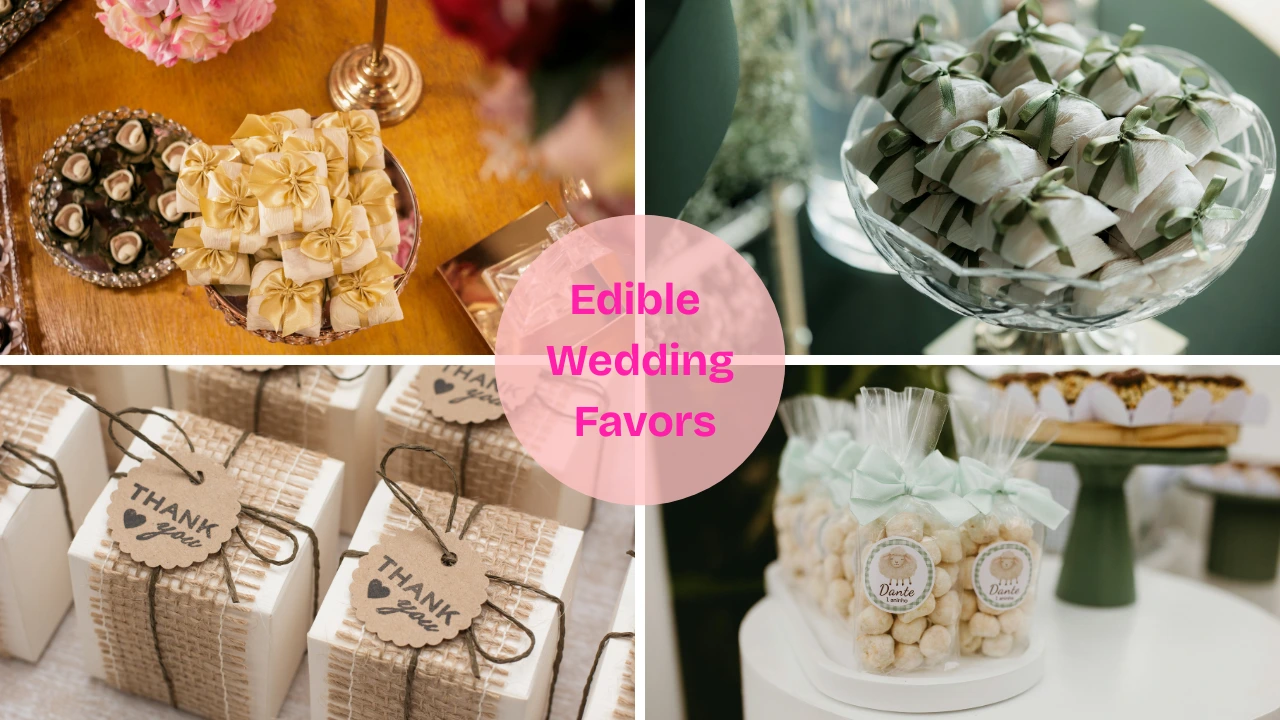
Most wedding favor advice sounds the same: mini honey jars, personalized candy bags, or cookie boxes – done. And that’s fine until you’re standing in front of 120 guests wondering why half the favors are still sitting on the table at the end of the night.
Choosing edible wedding favors isn’t really about picking a food. It’s about reading your crowd, understanding your venue, managing your budget honestly, and making sure the favor actually reaches someone’s mouth before it gets left behind. This guide is built around those realities.
Why Food-Based Favors Outperform Almost Everything Else
The wedding favor industry has a well-known problem: most non-edible favors end up in the trash. Miniature frames, decorative candles, and seed packets all share the same fate charming on the table, forgotten by Tuesday.
Edible wedding favors sidestep this problem almost entirely. They’re consumed at the event or taken home with genuine intent to eat. No storage decision, no guilt about discarding something, no shelf in a guest bathroom slowly filling up with tiny monogrammed trinkets.
Recent wedding industry surveys consistently show that guest experience now ranks as the top priority for the majority of couples, above aesthetics and even budget. That shift explains why food favors have become so dominant — they contribute to the experience of the day rather than decorating the exit table. They can also pull double duty as place cards or escort cards, making the reception feel more cohesive without extra cost.
What Couples Are Actually Choosing Right Now
The direction favors are moving matters more than the individual options. Couples are gravitating toward things that feel considered rather than generic — regional rather than mass-produced, experiential rather than decorative.
Artisan preserves and honey. Mini honey jars have been around long enough to become a cliché, but local raw honey from a regional apiary is something different — it has a story, a flavor profile, a provenance. Small-batch jams and infused olive oils carry the same appeal. These aren’t things most guests would buy for themselves, which makes them genuinely interesting as a gift.
Custom chocolate. Personalized bars with custom wrappers photograph well, travel well, and almost nobody dislikes chocolate. Chocolatiers often offer tiered pricing with costs dropping 10–20% for orders over 100 units, making this format especially practical for larger guest lists.
Coffee and tea. Single-serve pour-over packets and individually wrapped loose-leaf tea blends have found a devoted audience among couples who want something guests will actually use the morning after the wedding a favor that does its job the day after the celebration, not just during it.
Flavored popcorn and snack mixes. Caramel-coated or truffle-salt dusted popcorn turns an everyday snack into a gourmet experience. Trail mix packs work similarly — approachable, potentially nut-free, and easy to eat during a late reception or on the drive home.
Interactive confections. Cotton candy balls that dissolve in champagne releasing food-safe glitter and sweetness into the drink — function as both a favor and a reception moment. Set at each place setting for the toast, they become part of the event timeline rather than just a parting gift.
The Budget Conversation Nobody Has Honestly
Most edible wedding favor guides give you the item price and call it a day. That’s not useful.
The real calculation means keeping the entire presentation under your target cost per guest — factoring in sales tax, shipping, packaging, and personalization. A favor that costs $1.50 per person can easily become $3.50 once you add a custom box, a printed label, tissue paper, and shipping.
Packaging can cost as much as the favor itself. A beautiful artisan jam that costs $2 per jar looks underwhelming with a generic lid, so you add a kraft paper label and a linen ribbon — now you’re at $3.50 before shipping. The practical fix: decide on packaging before choosing your favor. Some formats come with it built in (chocolate bars with custom wrappers, individually boxed cookies). If you’re DIYing packaging, buying containers in bulk and printing your own labels saves hundreds compared to pre-personalized boxes.
A realistic breakdown at scale:
- Budget ($1–$2/guest): Candy bags, tea packets, sugar sachets, custom mints
- Mid-range ($3–$5/guest): Honey jars, jam jars, chocolate bars, flavored popcorn tins
- Premium ($6–$10+/guest): Artisan truffle boxes, specialty coffee sets, curated gourmet snack boxes
Homemade edible wedding favors require honest accounting too — ingredient costs, packaging supplies, and time. Homemade jam sounds romantic until you’re making 150 jars the week before your wedding.
Dietary Restrictions: The Part Most Guides Skip Over
The most common food allergens are peanuts and dairy. Nut-heavy trail mixes and dairy-based truffles will exclude a meaningful portion of most guest lists. The goal isn’t finding a universally “safe” favor — that’s nearly impossible — it’s being transparent about what you’re giving.
A small ingredient card tucked into each favor takes ten minutes to design and print. It’s the difference between a thoughtful gesture and a potential problem.
For guest lists with significant dietary diversity, consider two options displayed side by side — one standard, one clearly labeled as vegan, gluten-free, or nut-free. Far more manageable than trying to satisfy everyone with a single choice.
One often-overlooked practical issue: outdoor summer weddings need heat-stable favors. Chocolate melts, full stop. Honey, hard candies, coffee, tea, popcorn, and packaged cookies hold up in warm conditions. If you love the idea of chocolate favors at a summer celebration, you’ll need a climate-controlled display area.
Making the Favor Part of the Experience
The most effective edible wedding favors earn their place during the celebration, not just as something guests carry home.
A favor at each place setting becomes part of the table design. Guests see it when they sit down, interact with it during dinner, and decide whether to pocket it or leave it — a fundamentally different dynamic from grabbing something off a table near the exit.
Seasonal and regional choices amplify this. A winter wedding with spiced hot cocoa mix packets feels intentional. A coastal celebration with sea-salt caramels from a local confectioner tells a story. These details signal that the couple thought about their guests specifically, rather than selecting something from a generic dropdown menu.
Packaging: Where Aesthetics Meet Budget
Elegant doesn’t have to mean expensive. Mason jars and mini bottles found in bulk can be dressed with ribbon and a custom label. Kraft paper works beautifully for rustic or minimalist themes. Tulle or organza bags elevate smaller items like mints or candied nuts.
Two principles that matter most:
The label matters more than the container. A plain glass jar with a beautifully designed custom label looks more intentional than a decorative tin with a generic sticker. Spend your design budget on the label.
Consistency reads as polish. Matching ribbon color, tag font, or packaging format across all favors — even when contents differ — creates visual cohesion that photographs well and feels deliberate.
Before committing to 150 units, request a sample. What looks polished in a product photo can feel flimsy in person.
Sourcing: Local, Vendor, or DIY
Local artisan producers offer the most distinctive product, but typically require longer lead times and may lack the custom packaging infrastructure that wedding-focused vendors have built. Worth the coordination for couples who want something genuinely original.
Wedding-specific vendors have streamlined everything — custom labels, bundled packaging, bulk pricing, shipping guarantees. The tradeoff: your favor may look similar to others using the same vendor. If quality and design are strong, that’s a reasonable trade.
DIY makes sense when you have a genuine skill — baking, canning, candy-making — and time to spare. The labor cost is real even when it doesn’t appear on a receipt.
For most couples, a hybrid works best: a quality base product from a reliable vendor, made personal through packaging choices, a handwritten note, or a locally sourced ingredient.
Frequently Asked Questions
How far in advance should I order?
Custom specialty orders need 8–12 weeks. Mass-market options can be ordered 4–6 weeks out. Anything perishable should be coordinated with your vendor on timing and on-site storage.
How many should I order?
Order 10–15% more than your confirmed guest count. Some guests take extras; running short is far worse than having a few leftover.
What’s a realistic per-person cost?
Most couples land between $2 and $5 per guest once packaging and personalization are factored in. Premium artisan options run $8–$12.
What works for guests with allergies?
Hard candies, fruit preserves, honey, plain popcorn, and tea blends cover the widest range of dietary restrictions. Always include an ingredient label regardless of what you choose.
Can edible favors double as place cards?
Yes — and this is one of the smartest uses of them. A custom honey jar with a guest’s name on the label, a chocolate bar with a name card attached, or a small cookie box with a card tucked in all serve both functions and trim stationery costs.
