
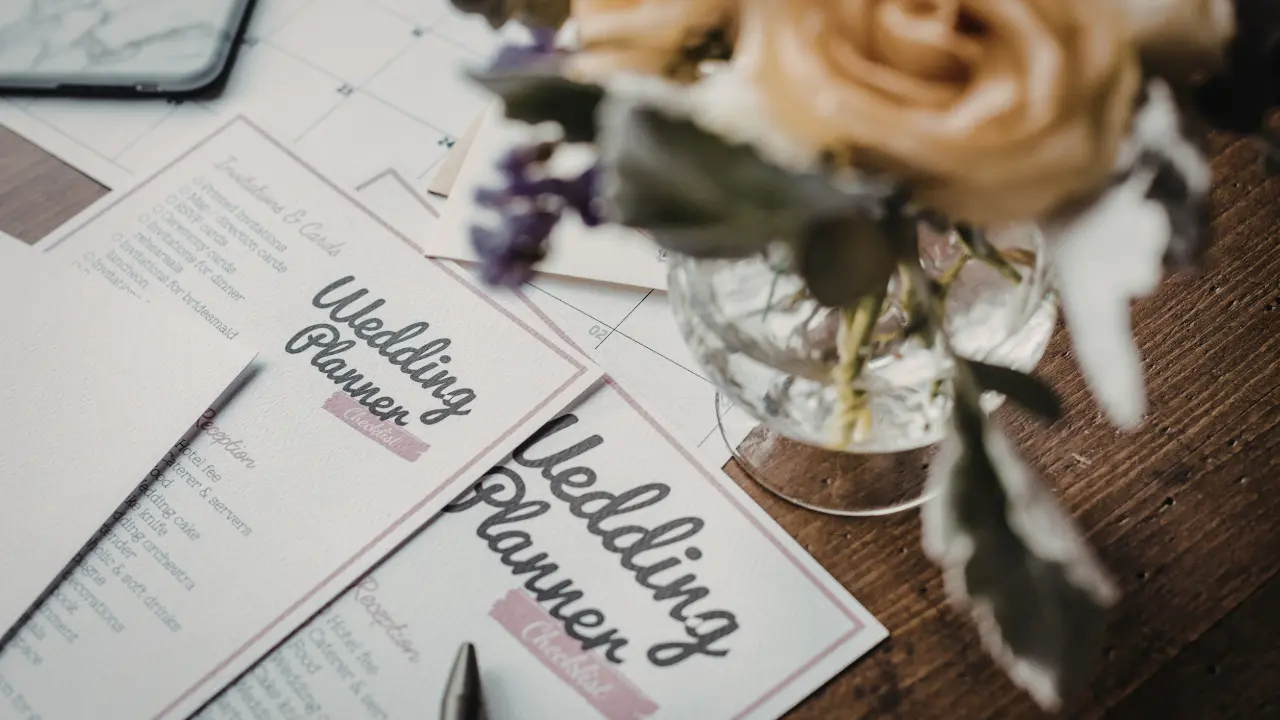
A thoughtful, practical guide to structuring your wedding day, from the first quiet morning hour to the final sparkler send-off , so you can be fully present for every moment that matters.
Introduction
Your wedding day deserves a plan as thoughtful as the love behind it
There are very few days in a lifetime where every single hour carries this much meaning. Your wedding day is one of them, and the couples who remember it most vividly, who felt the least stressed and the most present, are almost always the ones who took the time to build a proper wedding planning timeline before the day arrived.
Not a rigid schedule that leaves no room to breathe, but a thoughtful, well-considered guide that keeps vendors aligned, guests comfortable, and the two of you free to experience the day as it unfolds simply.
Planning a wedding in 2026 means navigating more choices than any couple in history has faced. Venue styles range from intimate garden ceremonies to grand ballroom affairs. Guest lists stretch from micro-weddings of twenty to celebrations of three hundred. Vendor teams grow larger and more specialized each year.
In all of this complexity, the wedding day timeline is the single document that holds everything together — the map that every photographer, caterer, DJ, florist, and coordinator follows when the morning of your wedding finally arrives.
This guide is written for real couples doing real planning. It covers why a timeline matters, how to build one that actually holds up under the pressure of the day, what has changed in 2026, and a complete sample schedule built around a 5:00 PM ceremony that you can customize, print, and share with your entire team.
Why it matters
Why a wedding timeline is the most important document you will create
Every vendor on your team — your photographer, your caterer, your DJ, your florist, your officiant — operates on a different rhythm. They arrive at different times, have different setup windows, and depend on cues from one another to do their best work.
Without a shared timeline, small miscommunications compound into delays that can unravel an entire evening. Speeches run long because no one told the emcee that dinner had already started. Florals arrive when the photographer has already packed up. The cake cutting happens before the dancing has even warmed up.
A strong timeline eliminates all of that. It gives every person on your team, paid and unpaid — a clear picture of the day from morning to midnight, so transitions happen smoothly, meals arrive warm, and no one is left wondering what comes next.
A wedding timeline does not control the day — it creates the space for the day to be what it is meant to be. Structure and spontaneity are not opposites. Done well, structure makes spontaneity possible.
A timeline also protects your photography. The difference between ordinary wedding portraits and images you will frame for decades often comes down to fifteen minutes of golden-hour light.
When your schedule is built with your photographer’s input, with careful attention to sunset time and portrait windows, your images reflect that care. And for your guests, a well-paced timeline means full glasses, warm food, and a clear sense of where the evening is heading. Nothing drains a reception’s energy faster than unexplained gaps or a meal that arrives ninety minutes late.
Day length
How long does a wedding day actually last?
Most couples are surprised to learn just how long their wedding day really is. For an evening ceremony at 5:00 PM, the day typically begins around 7:00 or 7:30 in the morning, when hair and makeup kick off, and vendors begin arriving at the venue. By the time the final vendor loads out, it is often well past midnight. That is a 15- to 16-hour day. A timeline that only accounts for the ceremony and reception leaves enormous gaps in the morning and evening, where confusion can creep in.
The general arc of a modern wedding day looks like this: a morning of getting ready, a pre-ceremony photography session (increasingly including a first look), the ceremony itself (typically 30 to 50 minutes for civil and non-denominational services, longer for religious or multi-cultural traditions), a cocktail hour, and a 3 to 5 hour reception with dinner, toasts, dancing, and a formal exit. Whatever your format, the schedule should reflect your actual wedding, not a generic template that was never adjusted to fit your day.
Planning rules
Six rules for building a timeline that holds up on the day
2026 trends
What has changed in 2026 — and how it affects your schedule
Wedding timelines in 2026 look meaningfully different from those of just a few years ago. The most significant shift is personalization, couples are building schedules that reflect their actual priorities rather than following a formula inherited from someone else’s wedding. The result is a more intentional, more enjoyable day for everyone involved.
The first look has become one of the most popular structural choices in modern wedding planning. Rather than seeing each other for the first time at the altar, the couple shares a private moment before the ceremony begins. This unlocks a full portrait session before guests arrive, meaning the post-ceremony hour can be completely given over to cocktails and genuine celebration rather than an extended photo marathon.
Content creation has also earned a formal place on the 2026 timeline. Many couples are now building dedicated windows for a content creator to capture phone-format, social-ready footage — during getting-ready hours, the first look, and golden hour. Scheduling these moments intentionally produces far better results than capturing them on the fly.
Ceremonies themselves have grown shorter and more curated. Couples are choosing meaningful rituals over lengthy programs, and after-parties have evolved from casual extensions into genuinely planned events with their own mood, playlist, and late-night menu.
Pro tips
Tips for making your timeline even stronger
Assign a family wrangler, a trusted friend or relative whose only job during portrait time is to gather each family group. Vendors do not know your family. A person who does will save you 20 minutes and several headaches. Give your photographer a written shot list covering every family combination and every must-have moment. A list discussed in advance is far more reliable than a conversation on the morning of the wedding.
If you have multiple locations, a church ceremony followed by a separate reception venue — add a full 30 to 45 minutes for transit on top of your actual drive time. Factor in parking, restroom stops, and the inevitable five-minute delay that happens when twenty people in formal wear try to board a shuttle at the same moment.
Build the timeline in collaboration with your photographer. They know your venue, they know how light moves through the space, and they will have opinions about when portraits should happen and how much time each moment needs. Their input is one of the most valuable contributions to the planning process.
Customize
Built for every wedding style and ceremony time
The sample schedule in the magazine timeline below is built around a 5:00 PM ceremony — the most common time for evening weddings. To adapt it, simply shift all times forward or backward to match your ceremony hour. The structure, spacing, and logic remain exactly the same.
Closing thought
The best wedding timelines are detailed enough to keep everyone aligned and flexible enough to absorb the moments that cannot be planned — the flower girl who decides to sit down in the middle of the aisle, the toast that runs long because the emotion was real, the sunset that turns the sky a color no one expected. These are not timeline failures. These are the wedding.
What a good timeline gives you is the structure to hold those moments without losing the thread of the day. When your vendors know the plan, small deviations become the stories you tell for the rest of your life. Share this schedule with your partner, your coordinator, and your team. Customize it until it sounds like you. Then hand it off — and give yourself full permission to be completely present for every single moment of it.
