
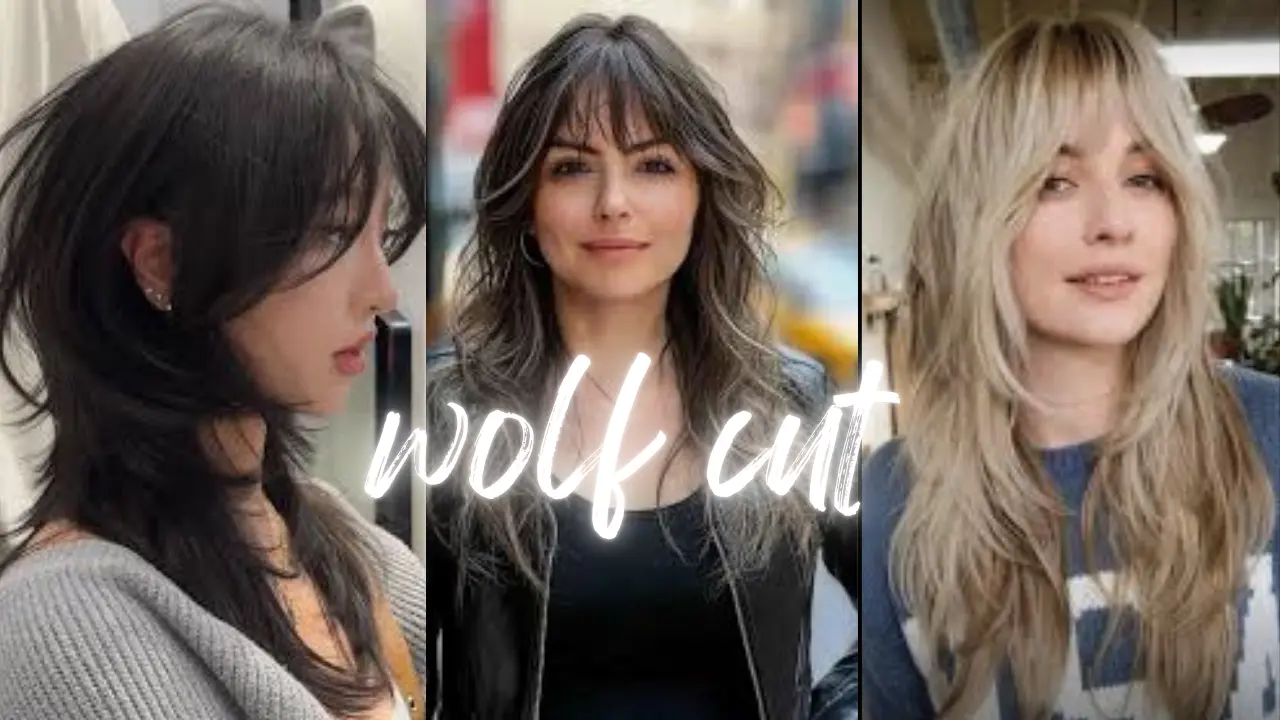
Layered, textured, and slightly untamed, the wolf cut is redefining what a great hair day actually looks like.
The anatomy
Where edge meets ease
At its core, the wolf cut is a modern reinterpretation of two iconic styles , the shag and the mullet — filtered through a contemporary, wearable lens. It combines choppy, face-framing layers at the front with a voluminous crown and softly tapered ends that trail with movement.
The result is a silhouette that feels alive. Not rigid, not overthought — just naturally textured and full of personality. It’s the kind of haircut that seems effortless precisely because it was designed that way.
Who it’s for
The wolf cut works for almost every texture
The wolf cut’s biggest strength is its flexibility. It doesn’t demand a specific hair type , it adapts to what you have and makes it work harder.
Whether your hair is thick or fine, a well-executed wolf cut can add depth, reduce heaviness, or create the illusion of fuller volume — the layering does all the heavy lifting.
Finding your version
Length is just a starting point
The wolf cut scales beautifully across lengths. A shorter version reads bold and directional. A medium-length cut hits the sweet spot — edgy enough to feel current, practical enough for everyday wear. Longer variations stay true to the aesthetic but with a softer, more flowing quality.
Whatever the length, the defining element is always the layering. That’s what creates the movement, the shape, and the signature undone finish that makes the wolf cut so instantly recognizable.
The routine
Styled in minutes, never overthought
The wolf cut thrives on a low-effort approach. A few essentials are all it takes to enhance the natural texture and let the cut do what it was designed to do.
For a slightly more polished finish, loose waves or defined front pieces add refinement, but the overall spirit of the wolf cut remains relaxed.
